

Request transforms
Run code after overrides and before the target call.
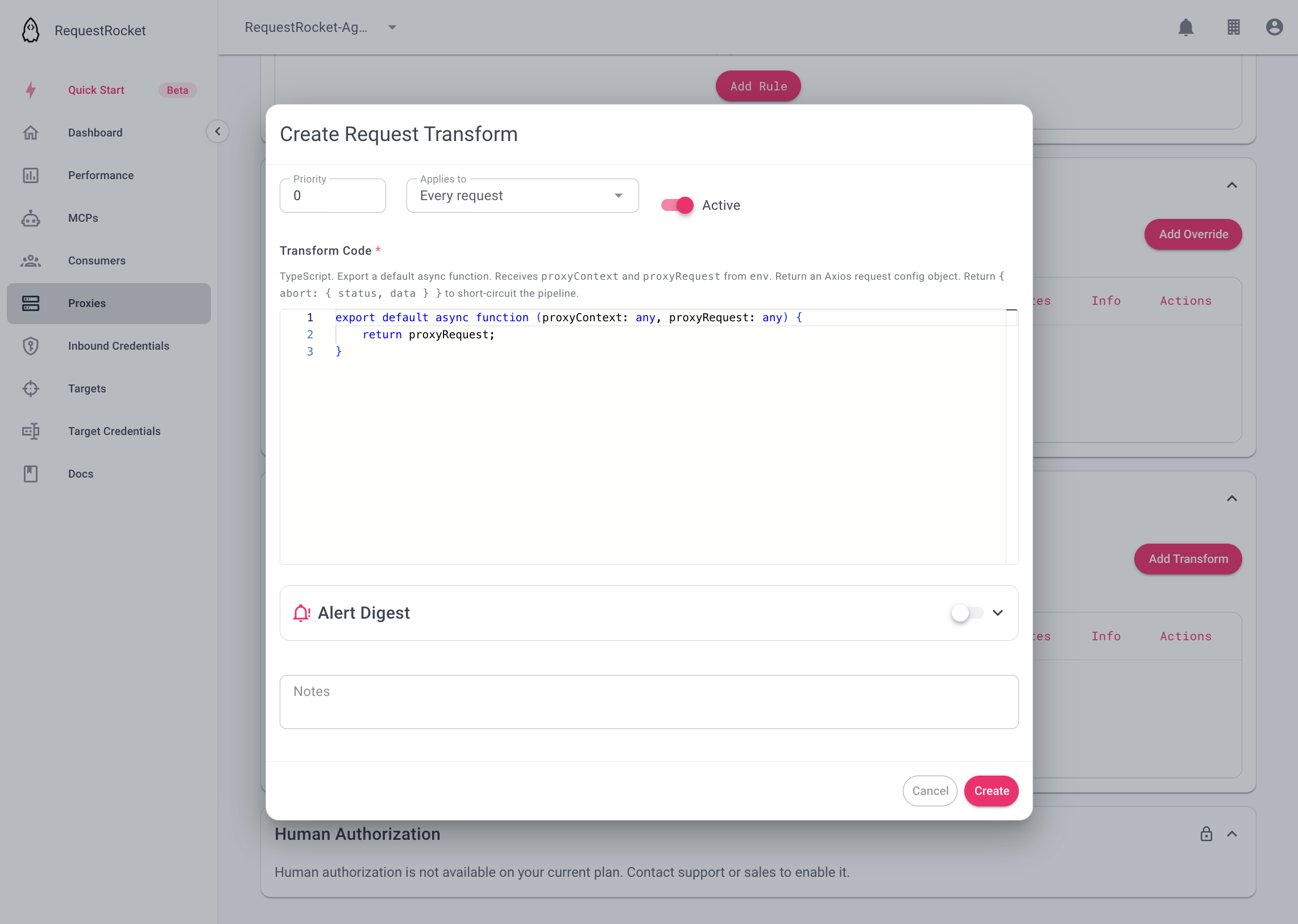
A request transform is a default-exported function. It runs after overrides and before RequestRocket calls the target. transformType is request. Attach one to a proxy or a direct MCP server. Path, header, query, body, and token matches are on Predicates.
The function receives (proxyContext, proxyRequest). Return a request-shaped object. RequestRocket accepts method, a relative url, headers, params, and data from that object. The target base URL and target credential are not exposed to the transform.
Add a request transform
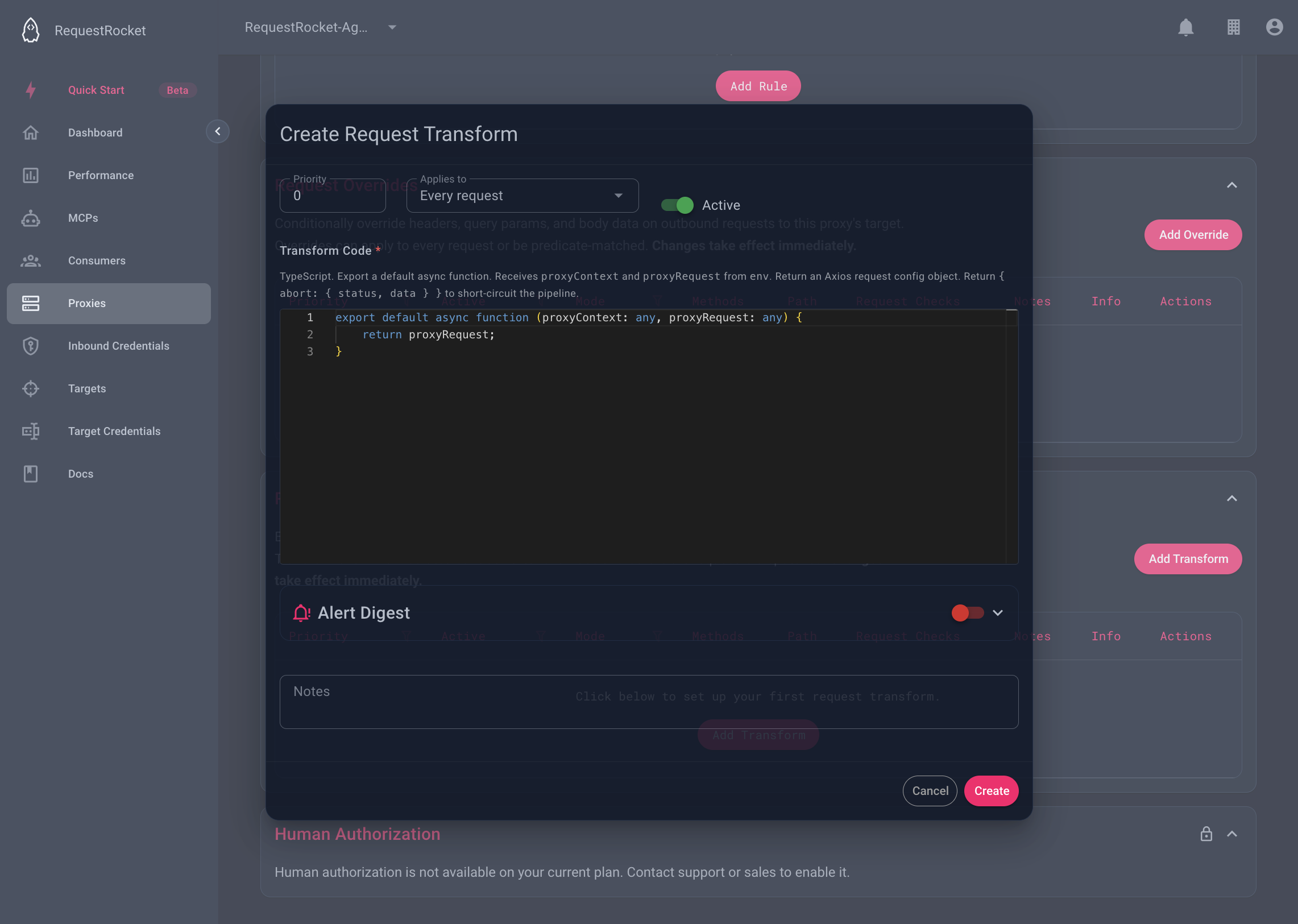
Open a saved proxy, open the Control tab, and expand Request Transforms. The code editor is the function RequestRocket runs.
Rename a body field
This example renames customer_name to customerName. Request bodies are sent only for POST, PUT, and PATCH calls.
export default function transform(proxyContext, proxyRequest) {
  const { customer_name, ...rest } = proxyRequest.data ?? {};

  return {
    ...proxyRequest,
    data: {
      ...rest,
      customerName: customer_name,
    },
  };
}
Add a computed header
export default function transform(proxyContext, proxyRequest) {
  return {
    ...proxyRequest,
    headers: {
      ...proxyRequest.headers,
      "x-request-path": proxyContext.path,
    },
  };
}
Test the transform
Save the transform, then send one call through the proxy. Use Request logs to find the call and confirm the target received the transformed request.
Runtime rules
- The source must default-export a function.
- Imports,
require,fetch, andprocessare rejected. - The sandbox has no network or filesystem access. It has a five-second execution limit and a 32 MB memory limit.
- A returned
urlmust be a relative target path. A transform cannot change the target origin. - Only the highest-priority applicable request transform runs.