

Overrides
Add headers, query parameters, or body fields on the way out.
An override injects headers, query parameters, or JSON body fields into the request RequestRocket sends to the target. It runs after rules and meters, and before request transforms. Attach one to a proxy or a direct MCP server. Path, header, query, body, and token matches are on Predicates.
Override values replace caller values with the same key. When several applicable overrides set one key, higher-priority overrides win because lower priorities are merged first.
Add an override
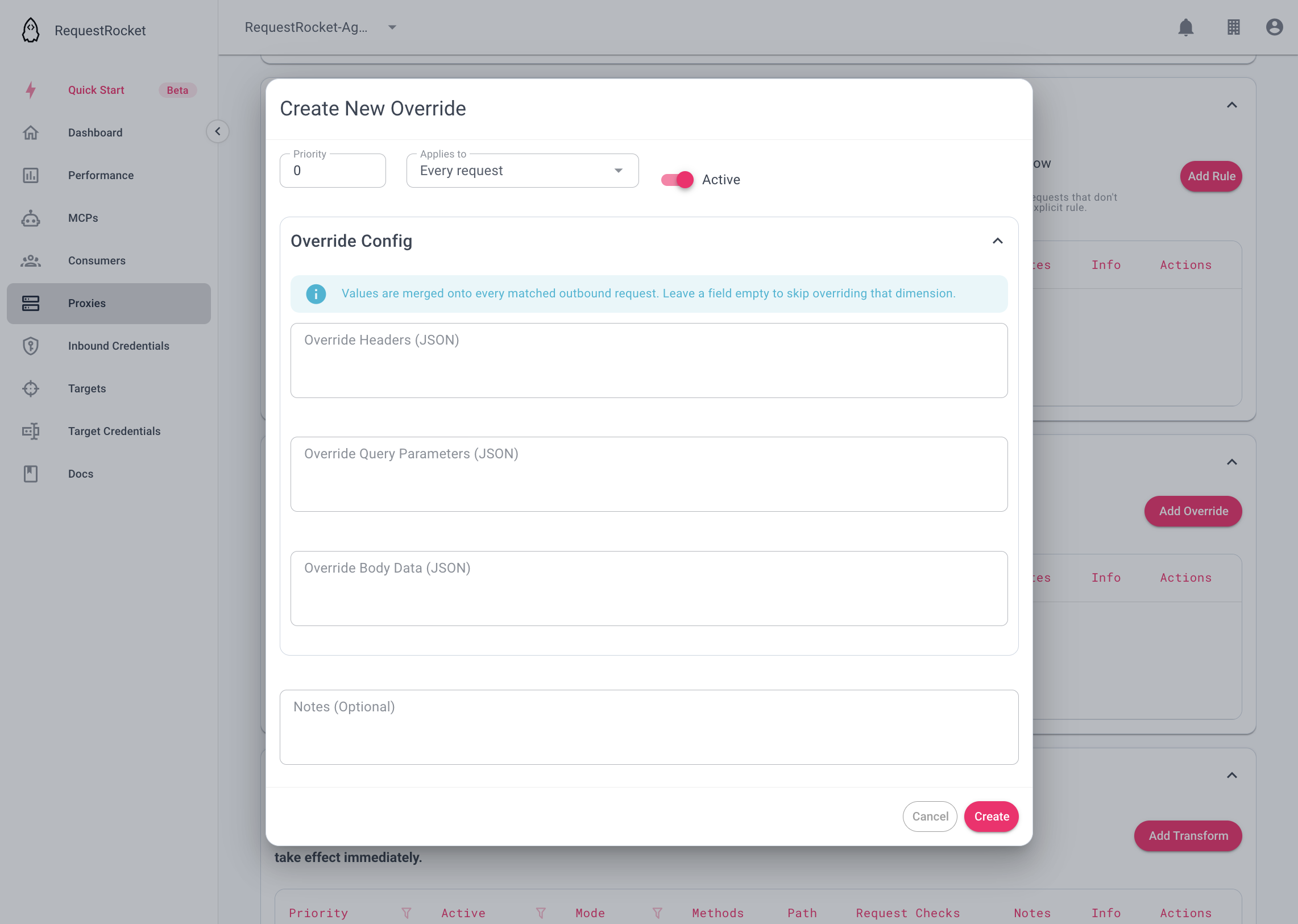
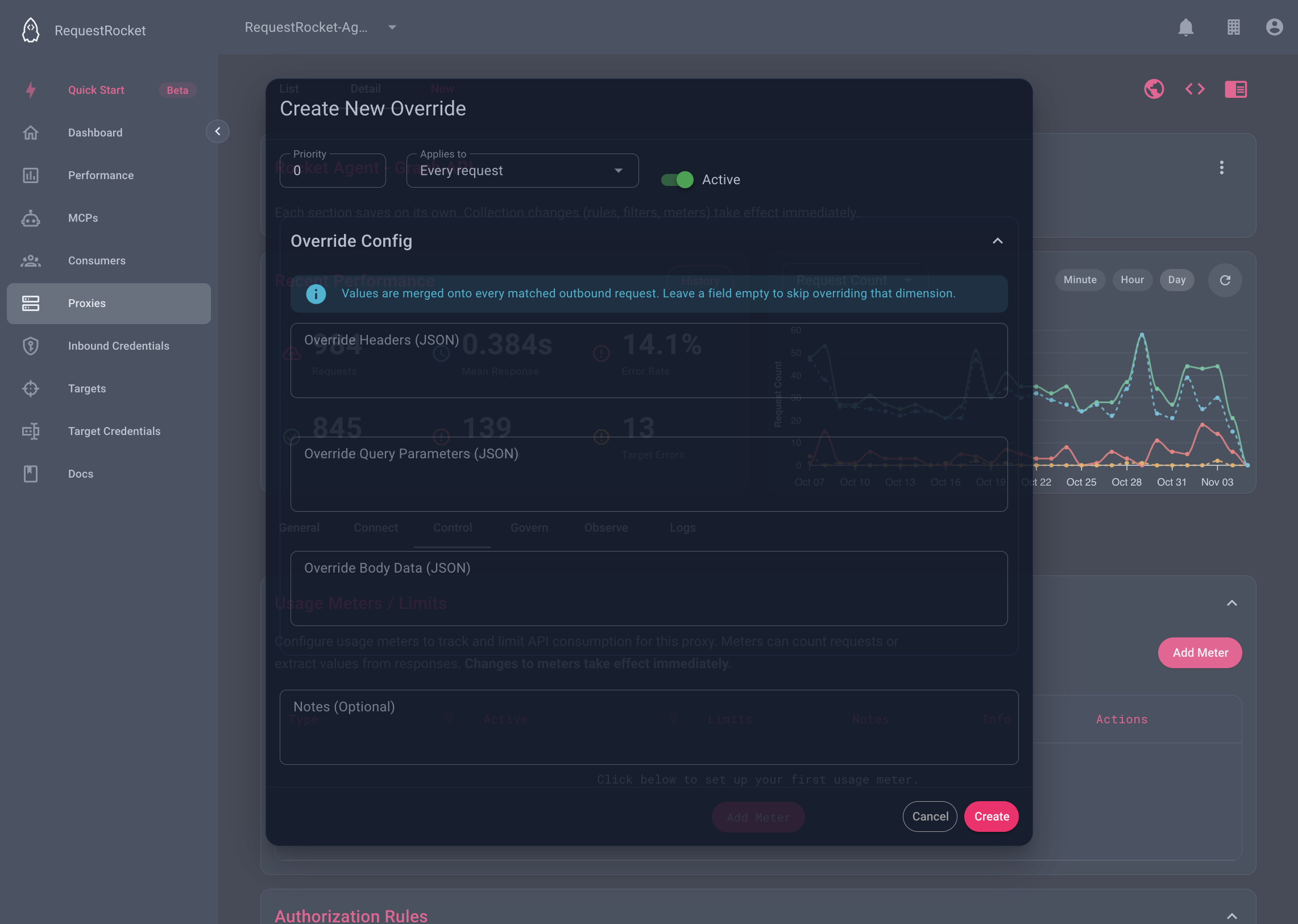
Open a saved proxy, open the Control tab, and expand Request Overrides. Set one or more maps:
- Header:
{ "X-Source": "requestrocket" } - Query:
{ "version": "2" } - JSON body:
{ "tenant": "acme" }
Use mode all for every call. Use conditional with include or exclude and a predicate for selected calls.
Result
The target receives the merged values. The caller's original request is still available to predicates, while request transforms receive the already-overridden header, query, and body values.
Do not store API keys or other target secrets in overrides. Use a target credential, which encrypts its secret and applies authentication through the appropriate authenticator.
Troubleshooting
- Body overrides merge into JSON request data; they are not a general text-body replacement.
- A proxy-backed MCP server cannot own overrides; configure them on its backing proxy.
- If one key has the wrong value, inspect every matching override and compare priorities.